

Modern artificial intelligence clusters, deep learning accelerators, and hyperscale compute engines impose punishing electrical demands on voltage regulator modules. As core processing voltages plunge below 0.8 V while dynamic transient currents spike past hundreds of amperes per microsecond, conventional power delivery topologies encounter severe parasitic and efficiency limitations.
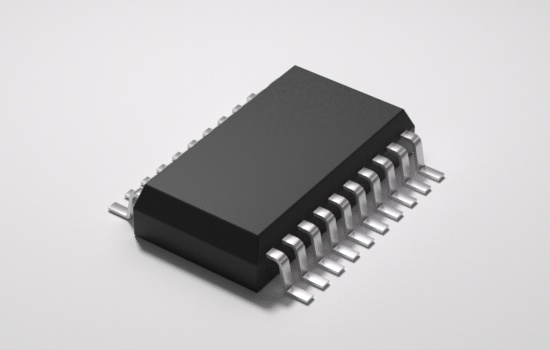
Legacy power stages relying on discrete driver ICs and external power MOSFETs consume excessive circuit board real estate and suffer from parasitic trace inductance. To mitigate these switching losses and achieve higher power density, the adoption of an advanced Renesas 90A Smart Power Stage (SPS) module has emerged as the premier solution for point-of-load architectures.
Deploying dense multiphase voltage regulators requires balancing low thermal resistance with millivolt-level regulation accuracy across severe dynamic transients. Hardware engineers must align sophisticated silicon architectures with resilient procurement frameworks to protect production schedules against sudden component shortages and extended lead times.
High-current server boards cannot tolerate voltage sag during aggressive processor state transitions. When processor workloads change rapidly, localized voltage regulators must respond to transient current demands and maintain voltage regulation to support stable system operation.
Technical Architecture of the Renesas 90A Smart Power Stage (SPS) Module
Engineered specifically for demanding multiphase point-of-load converters, the ISL99390FRZ-TR5935 delivers up to 90 A of continuous DC output current. Manufactured by Renesas Electronics, this Smart Power Stage (SPS) module integrates high-side and low-side power MOSFETs with a gate driver in a thermally enhanced package.
The device accommodates an operating input voltage range from 3.0 V to 16 V, making it ideal for standard 12 V intermediate server power distribution buses. With a switching frequency of up to 1.25 MHz, the power stage supports high-frequency multiphase converter designs, allowing engineers to evaluate smaller passive components according to system requirements.
System-level telemetry represents a standout capability of this integrated architecture. Rather than relying on traditional inductor DCR sensing networks, the device provides an integrated current monitor with ±3% accuracy across line, load, and temperature conditions.
Thermal monitoring is similarly sophisticated, outputting an analog signal calibrated to 8 mV/°C directly to external digital multiphase controllers. For mission-critical server environments, the compact Renesas 90A Smart Power Stage (SPS) module delivers autonomous protection against high-side MOSFET shorts, smart reverse overcurrent conditions, and thermal runaway.
Housed in an ultra-low-profile 5×6 mm QFN package, the component maximizes thermal conduction directly into the inner ground planes of the printed circuit board. Its 3.3 V tri-state pulse-width modulation input interface pairs effortlessly with digital multiphase controllers to execute rapid diode braking and phase-shedding routines.
Minimizing parasitic switch-node ringing is essential for maintaining electromagnetic compatibility in dense server chassis. Co-packaged driver and power switches substantially reduce stray loop inductance compared to discrete implementations, suppressing high-frequency voltage spikes and improving conversion efficiency under heavy computational loads.
Selecting a Qualified SPS Supplier for Mission-Critical Compute Infrastructure
Modern server motherboards and accelerated computing blades regularly deploy 8 to 16 parallel phases per computational socket to satisfy massive instantaneous current steps. Under these dense design parameters, partnering with a dependable SPS supplier becomes an operational imperative to avert catastrophic assembly interruptions.
A missing power management device can halt a complete surface-mount assembly line, stalling production for high-value server racks and enterprise telecommunication switches. As global fabrication capacity prioritizes compute silicon over auxiliary analog power chips, procurement teams encounter severe allocation constraints, unpredictable spot pricing, and protracted factory delivery commitments.
To address these procurement bottlenecks, Unibetter distributes a wide range of electronic components across high-density computing, telecommunications, and industrial automation sectors. This expansive product scope allows purchasing departments to streamline procurement workflows by sourcing microcontrollers, power stages, and passive support networks from an established global distributor.
Maintaining single-source reliance during demand spikes leaves hardware manufacturers vulnerable to production rescheduling and unfulfilled deliveries. Consolidating bill-of-materials sourcing across multiple component categories establishes supply resilience, enabling design teams to transition smoothly from rapid prototyping to volume hardware fabrication.
Multiphase power systems require strict component matching across every operational rail to guarantee current-sharing uniformity. Sourcing power stages from disjointed production batches can introduce subtle parametric variations that degrade thermal balancing and trigger localized hot spots, underscoring the necessity of structured procurement planning.
Mitigating Sourcing Risks Through Franchised Component Procurement
When standard distribution pipelines tighten, purchasing agents face heightened exposure to unverified secondary brokers and open-market exchanges. Operating in uncontrolled grey markets risks the inadvertent introduction of remarked, counterfeit, or substandard power semiconductors that fail catastrophically under extreme electrical and thermal stress.
To eliminate quality risks, Unibetter sources and procures electronic components from franchised sources to guarantee 100% authentic, quality-assured and brand-new electronic components. Every incoming shipment undergoes meticulous visual screening, package verification, and electrical testing to confirm compliance with original manufacturer technical specifications and stringent factory traceability standards.
Supply tightness often creates sharp price premiums on specialized power stages, threatening overall project viability and gross operating margins. The brand’s service strength is supporting customers to locate needed electronic components and acquire them at lower costs, preserving financial targets while securing critical hardware components during peak allocation periods.
Navigating volatile market cycles requires end-to-end logistics coordination and proactive supply chain visibility. Working alongside a knowledgeable SPS supplier allows engineering organizations to forecast lead-time fluctuations, evaluate secondary part alternatives, and maintain steady component pipelines across extended product lifecycles.
Through proactive inventory monitoring and global supply networks, Unibetter assists manufacturing partners in maintaining predictable hardware build cycles. This disciplined supply management prevents unexpected factory downtime and empowers equipment builders to deliver enterprise systems on schedule without compromising silicon integrity.
Engineering Resilient High-Current Power Architectures
Designing high-current voltage regulator modules for advanced computing systems requires careful consideration of power density, thermal performance, and dynamic current monitoring. Integrating high-performance silicon like the ISL99390FRZ-TR5935 enables engineering teams to satisfy demanding core voltage tolerances while minimizing parasitic board losses and component footprints.
Technical excellence on the schematic represents only half of the equation for commercial hardware success. By coupling state-of-the-art power semiconductor architectures with authenticated franchised procurement channels, hardware manufacturers establish durable supply pipelines that safeguard product quality and ensure long-term manufacturing competitiveness.
