

Rising fuel prices, stricter emission standards, and growing pressure on public transport budgets have made fleet efficiency a practical concern for operators. Replacing older vehicles, however, involves more than comparing purchase prices or engine specifications.
Energy consumption, maintenance requirements, route conditions, and vehicle utilization all influence the financial and environmental results over time. A well-planned electric bus transition can help address several of these pressures, while Yutong Bus develops different energy solutions for public transport operators facing varied service requirements.
Understanding the Sources of Fleet Emissions and Expenses
Traditional diesel fleets generate direct emissions through fuel combustion, including carbon dioxide, nitrogen oxides, and particulate matter. Their environmental impact is particularly noticeable in densely populated areas, where buses repeatedly accelerate, idle at stops, and travel through congested streets. Frequent stop-and-go operation can also increase fuel consumption and place additional demands on mechanical components.
Operating expenses extend beyond fuel. Engine servicing, oil and filter replacement, exhaust after-treatment maintenance, and transmission repairs contribute to the lifetime cost of a conventional bus. Older vehicles may also experience more frequent downtime, affecting service reliability and requiring operators to arrange replacement vehicles or adjust schedules.
A useful fleet assessment begins with actual operating data. Fuel consumption per kilometer, annual mileage, maintenance records, average passenger numbers, and vehicle age can reveal which routes or vehicles create the greatest costs. Such information helps operators distinguish between problems caused by inefficient vehicles and those related to route design, driving behavior, or scheduling.
How Electrification Changes Energy Use and Maintenance
An electric powertrain converts stored electrical energy into motion without burning fuel onboard. Electric motors can deliver high torque from low speeds, which suits urban routes involving frequent starts and stops. Regenerative braking also recovers part of the vehicle’s kinetic energy during deceleration and returns it to the battery, reducing energy losses in suitable operating conditions.
Maintenance requirements differ from those of diesel vehicles. Battery-electric buses do not require engine oil changes or conventional exhaust-system servicing, and their braking systems may experience less wear because regenerative braking handles part of the deceleration process. However, battery health, high-voltage components, cooling systems, and electrical connections require specialized inspection and maintenance procedures.
The financial result depends on the electricity tariff and charging strategy. Depot charging during lower-cost periods may reduce energy expenditure, while poorly planned charging can increase demand charges or disrupt vehicle availability. Operators should compare electricity costs with existing fuel expenses using realistic daily mileage and charging efficiency rather than relying solely on published energy-consumption figures.
Matching Vehicle Technology to Daily Service Demands
Not every route places the same demands on a vehicle. Short urban journeys involve frequent stops, passenger turnover, and traffic delays, while suburban services may cover longer distances at more consistent speeds. Passenger capacity, road gradients, climate, and available charging time all affect the suitability of a particular powertrain.
Hybrid technology offers another approach for fleets that are not yet ready for full electrification. By combining an internal combustion engine with an electric motor, a hybrid vehicle can recover braking energy and use electric assistance during certain operating conditions. Its actual fuel savings depend on the hybrid architecture, route profile, passenger load, and driving cycle.
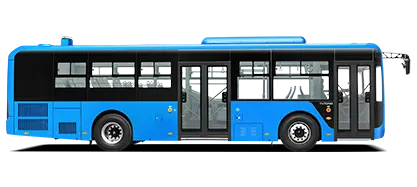
The Yutong H10 demonstrates this type of configuration. This 10-metre hybrid city bus has a stated passenger capacity of up to 80 people, making it relevant to urban services where passenger demand and operating flexibility both matter. Its hybrid design provides an alternative for operators assessing lower-emission options alongside fully battery-powered vehicles.
Planning the Transition and Measuring Long-Term Results
Fleet electrification requires preparation beyond vehicle procurement. Charging equipment, grid capacity, depot layout, maintenance facilities, and technician training all influence implementation. A depot assessment should examine how many vehicles need charging simultaneously, how long they remain parked, and whether existing electrical infrastructure can support the additional load.
Route trials can help verify expected operating costs before a larger fleet conversion. Operators can record energy use, charging duration, passenger occupancy, vehicle availability, and maintenance events across representative service conditions. Comparing these results with the performance of existing vehicles provides a more realistic basis for calculating lifecycle costs.
Environmental performance also needs careful measurement. An electric bus produces no tailpipe emissions during operation, but its overall carbon footprint depends partly on the electricity mix and battery manufacturing process. A hybrid vehicle can reduce fuel consumption compared with a conventional equivalent, although it continues to use liquid fuel. Transparent comparisons should account for these differences rather than treating every low-emission technology as environmentally identical.
Conclusion
Lower fleet expenditure and cleaner public transport depend on decisions that connect vehicle technology with the realities of daily service. Route analysis, energy planning, maintenance preparation, and performance monitoring help operators understand whether a new powertrain can deliver lasting value.
Different fleets may benefit from different transition paths, including hybrid configurations and fully electric vehicles. Through its range of public transport solutions, Yutong Bus gives operators options to assess against their capacity needs and operating conditions, while a carefully evaluated electric bus investment can support lower local emissions and more predictable energy costs over its service life.
