

The lowest detection-limit figure in a specification may describe only part of the HPV panel being considered. A clinical laboratory choosing an HPV test kit needs to know which targets that figure belongs to and what kind of evidence it expresses.
Reporting design, analytical detection and agreement with a comparison method address different selection questions. Reading them separately prevents a single attractive number from becoming a general claim about every finding the laboratory will release.
Establish Which Genotype Distinctions the Report Preserves
Result fields reveal how a panel converts its target coverage into information for a screening service. The number of included genotypes states the breadth of the examination, while separate fields identify distinctions the laboratory can retain. Those dimensions are related, but a count of covered types does not describe the complete reporting structure.
A laboratory considering an HPV PCR test kit can begin with the information its applicable screening pathway requires. A general detection finding and a named genotype finding supply different detail. The relevant question is which distinctions the method establishes, without treating a molecular finding as an independent diagnosis of cervical disease.
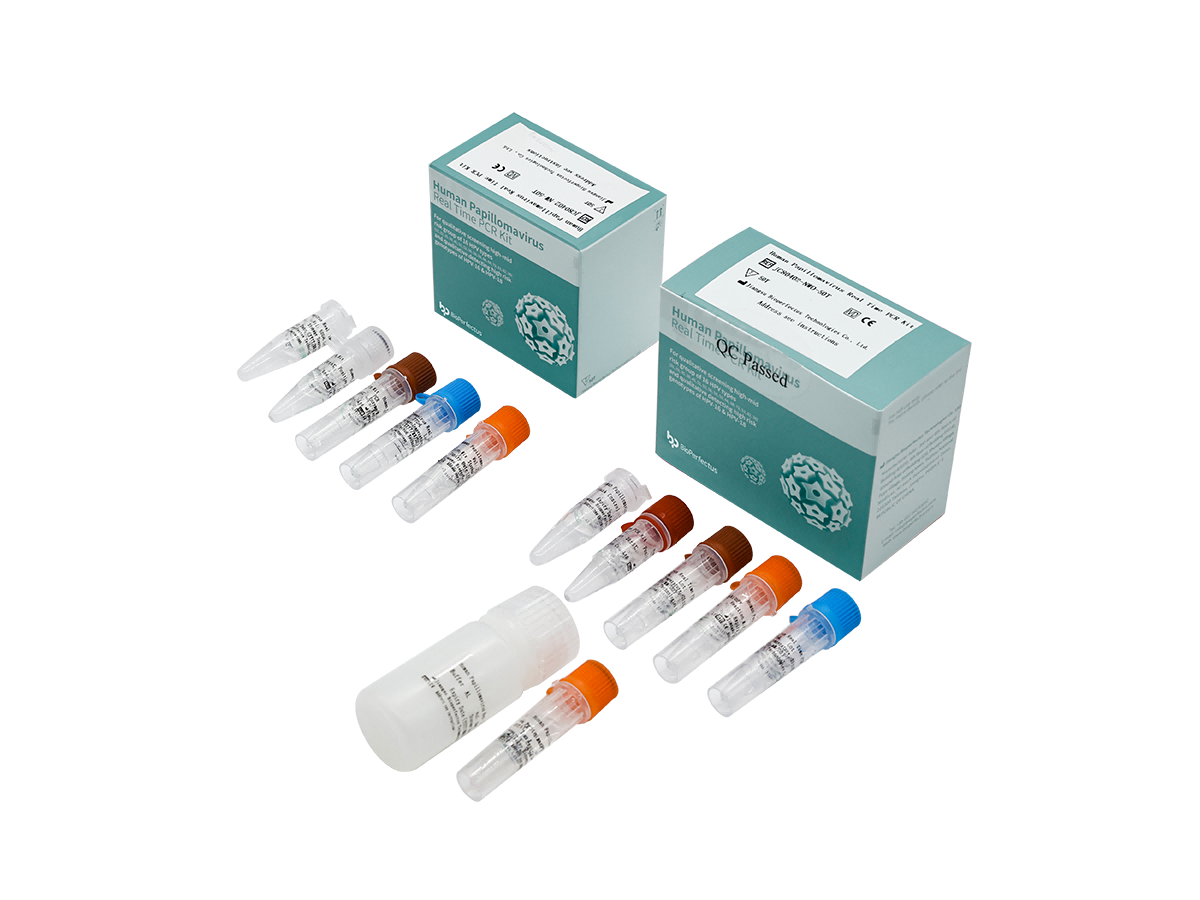
The BioPerfectus Human Papillomavirus Real-Time PCR Kit qualitatively detects 18 HPV genotypes and reports HPV 16 and HPV 18 as separate findings. That distinction between target coverage and reported identity informs the laboratory’s report assessment. The stated coverage must not be expanded into individual identification of every included type merely because all appear on the target list.
An HPV test kit specification can consequently be read target by target before its numerical performance is assessed. A separately reported type needs its own correct identity and interpretation within the assay. The clinical meaning of that finding still belongs to the applicable assessment pathway, rather than following automatically from a laboratory display field.
Keep Detection Limits and Agreement Figures in Their Own Categories
A detection limit concerns an assessed concentration at the analytical boundary. It needs a unit, a named target and the conditions supporting the claim. Where target groups have different specified limits, quoting only the smallest value would remove an important distinction from the proposed method’s performance description.
For the BioPerfectus assay, the stated limits are 500 copies/mL for HPV 16 and HPV 18, and 3000 copies/mL for the other listed genotypes. Both figures retain their concentration unit and target assignment. They cannot be converted into copies per reaction from the printed values alone, because preparation and the portion transferred intervene between original material and analytical input.
Agreement measures describe another aspect of evaluation. Positive percent agreement concerns agreement among observations classified as positive by the comparison used; negative percent agreement concerns the corresponding negative classification. Neither label, by itself, establishes the probability that a particular screened person has cervical disease or predicts the outcome of clinical follow-up.
The product lists positive percent agreement of 95.19% and negative percent agreement of 96.59%. An HPV PCR test kit comparison needs those names to remain attached to their values. Renaming them universal clinical sensitivity and specificity would introduce an interpretation that the stated agreement labels do not independently support.
Agreement percentages need their denominators. The positive and negative comparison groups contain different observations, so their percentages cannot be combined casually into a single accuracy figure. The laboratory needs the relevant evaluation context before interpreting either percentage for its proposed use.
A meaningful comparison also retains the reference procedure, specimen set and classification rules used in evaluation. Disagreement between methods requires examination within that framework rather than an automatic assignment of fault to one result. An apparently higher percentage from a different study cannot settle a purchasing comparison without its supporting context.
Connect the Numerical Review to an Executable Laboratory Method
Performance figures still need a specimen and an operating arrangement through which the laboratory can obtain the intended observation. Accepted material, preparation and supported equipment supply that practical context. An analytical claim does not remove the separate task of establishing that the local configuration performs the examination it is being asked to provide.
The BioPerfectus product accepts cervical exfoliated cells, cervical swabs and cytology specimens collected in ThinPrep or BD SurePath media. Its extraction configurations retain the applicable conditions for those cytology media. Reagent and instrument choices therefore belong with the submitted material during method introduction, rather than being inferred solely from a detection-limit number.
Routine planning can distinguish reaction time from the surrounding work of receipt, preparation and review. Suitable reagent storage and the required instrument configuration also remain conditions of testing. The comparison concerns a method that can be carried out under those conditions, without turning an advertised analytical interval into a guaranteed reporting deadline.
An HPV test kit evaluation can assign its observations to the question they answer: report coverage, analytical detection, agreement evidence or operating suitability. Reviewing an HPV PCR test kit through those categories keeps unresolved points visible. A favourable result in one category does not supply missing evidence in another.
The laboratory’s selection record can now state why the proposed report and its supporting evidence fit the intended service. Target-specific limits retain their units, agreement figures retain their evaluation meaning, and the specimen route remains defined. The chosen method is justified by those connected findings rather than by whichever numerical value looks strongest in isolation.
