

Opacity is a critical performance requirement in custom spray paint development because it affects how effectively a coating hides the original surface. Whether the goal is covering a dark substrate, achieving a uniform decorative finish, or reducing the number of application layers, opacity directly affects product performance and user satisfaction.
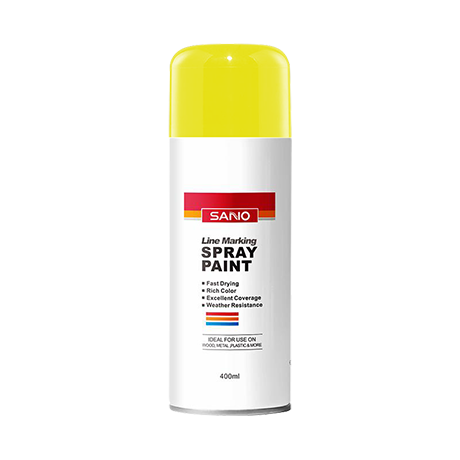
Many customers assume that higher pigment content automatically creates better hiding power. However, pigment loading and opacity are influenced by multiple formulation factors, including pigment characteristics, resin compatibility, dispersion quality, solvent balance, and coating thickness.
These factors are evaluated together by SANVO during the development of customized spray paint solutions, helping brands achieve consistent color appearance, reliable coverage, and stable application performance across repeated production batches.
What Factors Influence Pigment Loading and Opacity in Custom Spray Paints?
Pigment loading and opacity are not controlled by one single ingredient. They depend on how different components of the coating system interact with each other.
The major factors influencing opacity include:
Pigment concentration and pigment volume concentration
Pigment type and optical properties
Particle size distribution
Dispersion quality
Resin system compatibility
Solvent evaporation behavior
Applied film thickness
Manufacturers can therefore optimize pigment loading, dispersion, and film formation together rather than increasing pigment content alone.
Pigment Concentration Influences the Starting Point of Opacity
Pigment loading is one of the most direct factors affecting hiding performance. The amount of pigment contained in a coating influences how much light is absorbed and scattered after application.
A higher pigment concentration can improve opacity because more pigment particles are available to block the background surface. However, increasing pigment loading beyond the optimal level may create formulation problems.
Excessive pigment can reduce flow properties, increase viscosity, and make aerosol spraying less consistent. The coating may become difficult to atomize, resulting in rough surfaces or uneven coverage.
For this reason, formulators focus on finding the correct pigment level rather than using the maximum possible amount.
Pigment Type Influences Light Scattering Ability
The type of pigment used in a spray paint formula has a major effect on opacity. Different pigments have different abilities to interact with light.
Certain inorganic pigments can provide strong hiding power because of their optical properties. For example, titanium dioxide is widely used in coatings requiring high opacity because it efficiently scatters visible light.
Organic pigments may provide stronger color intensity and brighter shades, but some require additional formulation adjustments to achieve similar hiding performance.
When developing custom spray paints, manufacturers must consider whether the priority is maximum opacity, vibrant color, special effects, or a combination of these properties.
Particle Size Distribution Affects Pigment Efficiency
Pigment particle size is another important factor controlling opacity. The way pigment particles are distributed throughout the coating affects how efficiently they scatter light.
If pigment particles are not within the suitable size range, the coating may lose optical efficiency. Large particles can reduce surface smoothness, while overly fine particles may not provide the desired light-scattering effect.
A controlled particle size distribution helps pigments perform more effectively inside the coating film.
This factor is especially important for spray applications because aerosol coatings require smooth atomization and uniform film formation.
Pigment Dispersion Quality Controls Coverage Uniformity
Even when the correct pigment type and loading level are selected, poor dispersion can reduce opacity performance.
During manufacturing, pigment particles must be evenly separated and distributed throughout the resin system. If particles form clusters or agglomerates, some areas of the coating may contain insufficient pigment while others contain excessive concentrations.
Poor dispersion can lead to:
Uneven color appearance
Reduced hiding power
Surface defects
Batch inconsistency
A stable dispersion process allows pigment particles to work effectively and improves the reliability of customized spray paint performance.
Resin Compatibility Affects How Pigments Perform
The resin system surrounding the pigment particles also influences opacity. Pigments do not function independently because the binder affects how they are positioned and maintained inside the coating film.
A suitable resin helps keep pigments evenly distributed during storage and application. It also affects how light travels through the final coating layer.
If pigment and resin compatibility is poor, the coating may experience settling, separation, or inconsistent opacity.
For a professional custom spray paint formulation, selecting the correct resin system is essential because it connects pigment performance with overall coating durability and appearance.
Film Thickness Changes the Final Hiding Result
The thickness of the applied coating layer directly influences opacity. A thin coating film may allow more of the original surface color to show through, while a thicker film generally provides stronger coverage.
However, increasing film thickness is not always the best solution. Excessive coating buildup can affect drying speed, surface appearance, and material efficiency.
A well-designed spray paint formula should achieve sufficient opacity at a practical application thickness.
This requires balancing pigment loading, resin properties, and spray behavior rather than relying only on heavier coating layers.
Solvent System Influences Pigment Distribution During Application
The solvent system affects how pigments move and settle while the coating is being sprayed and dried.
Proper solvent selection helps maintain stable pigment distribution during application. It allows the coating droplets to spread evenly and form a consistent film on the substrate.
If solvent evaporation occurs too quickly, the coating may lose leveling ability and create uneven coverage. If evaporation is too slow, pigments may move during drying and affect surface uniformity.
Therefore, solvent balance is an important supporting factor in achieving stable opacity.
Why Custom Formulation Requires More Than Increasing Pigment Content
A common mistake in spray paint development is assuming that adding more pigment will always improve coverage.
In reality, opacity is the result of interaction between pigment properties, formulation design, and application conditions. Too much pigment may damage spray performance, reduce stability, and increase production challenges.
Custom development focuses on optimizing the complete coating system to achieve the desired balance between hiding power, appearance, durability, and application efficiency.
This approach helps brands create products that perform consistently instead of relying on excessive pigment usage.
Quality Control Ensures Stable Opacity Between Production Batches
For commercial spray paint products, maintaining consistent opacity from batch to batch is essential.
Variations in pigment raw materials, mixing conditions, or dispersion processes can create noticeable differences in color and coverage.
Manufacturers need to monitor pigment distribution, viscosity, spray performance, and finished film appearance during production.
Consistent quality control ensures that customers receive the same coating performance throughout repeated orders.
Conclusion
Pigment loading and opacity in custom spray paints are influenced by several key factors, including pigment concentration, pigment type, particle size, dispersion quality, resin compatibility, film thickness, and solvent balance.
By understanding how these factors interact, SANVO helps customers develop customized spray coatings with reliable hiding performance and consistent visual quality. A scientific approach to pigment management allows brands to achieve better coating results without sacrificing spray performance or product stability.
